


For more than a decade, launching an app on an iPhone meant playing by one set of rules. Apple’s App Store was the only path to iOS users—and for many developers, that gate defined their entire business model. Even today, it’s a striking reality: while roughly 72% of smartphones globally run Android and about 28% run iOS, Apple’s App Store still generates billions each year because of its influence over how apps are distributed and monetized.
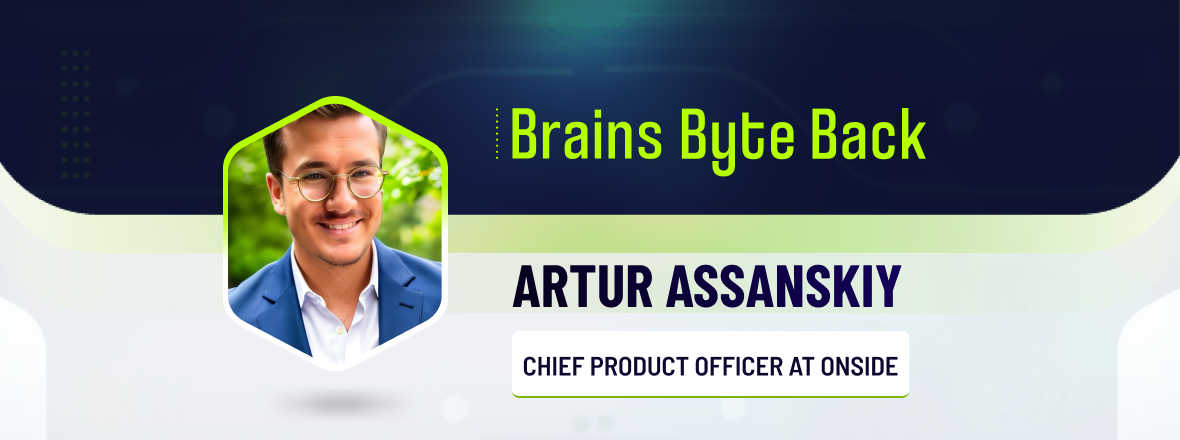
In Europe, that balance began to shift in March 2024, when the European Union’s Digital Markets Act forced Apple to allow alternative app marketplaces on iOS devices. In the latest episode of Brains Byte Back, host Erick Espinosa speaks with Artur Assanskiy, Chief Product Officer at Onside, about what actually changed and what didn’t.
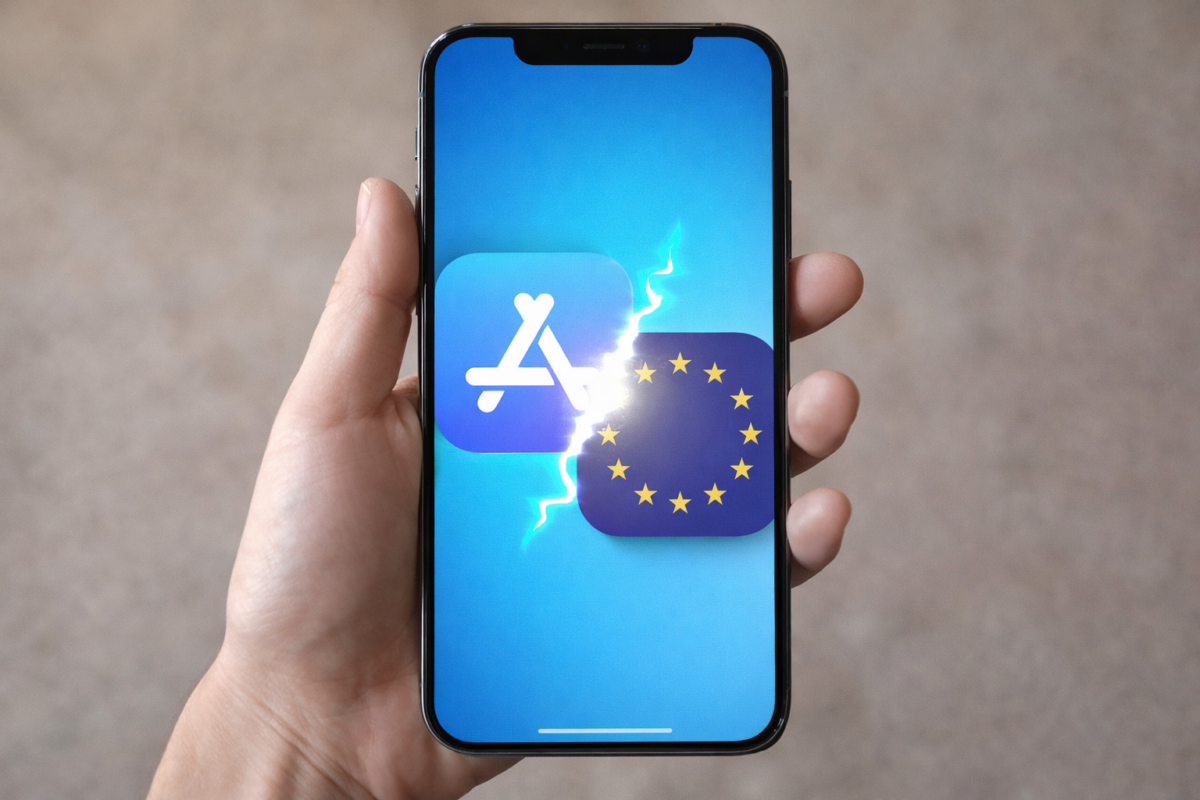
“To be honest, March 2024 was the moment the iPhone legally turned from a console into a computer,” Assanskiy explains. Before that point, he adds, “Apple decided what you could install and Apple taxed every transaction at 30%.” For developers building subscription services, games, or digital tools, that percentage could represent the majority of their margins. A percentage that still exists in other markets, in other parts of the world.
But opening distribution didn’t automatically make things simple. Assanskiy notes that Apple’s early response to the DMA included a per-install Core Technology Fee. “They were charging half a euro per install for popular apps, which is crazy, to be honest,” he says. “This model punished virality, especially for free apps.” For developers suddenly trying to navigate new rules, compliance questions, and evolving fee structures, many chose to wait and see.
That uncertainty is part of why companies like Onside are creating infrastructure for alternative iOS distribution. As Assanskiy explains, “We are building the infrastructure that allows developers to distribute and monetize iOS apps outside of Apple’s traditional monopoly.” The goal is to help developers test new monetization models, manage compliance, and reach users in a more flexible way as new regulations reshape the mobile ecosystem.
Espinosa and Assanskiy unpack the real impact of the Digital Markets Act, what developers are learning in Europe, and what it could mean for founders, AI builders, and product teams worldwide. As mobile platforms evolve, the biggest question isn’t just how apps are built—it’s how they reach the people who need them.
You can listen to the full episode on Spotify, Anchor, Apple Podcasts, Breaker, Google Podcasts, Stitcher, Overcast, Listen Notes, PodBean, and Radio Public.
Find out more about Artur Assanskiy here.
Learn more about Onside here.
Reach out to today’s host, Erick Espinosa – [email protected]
Get the latest on tech news – https://sociable.co/
Leave an iTunes review – https://rb.gy/ampk26
Follow us on your favourite podcast platform – https://link.chtbl.com/rN3x4ecY
Transcript:
Artur Assanskiy: Hi, my name is Artur Asansky. I’m the CPO at Onside. Here in Onside, I lead the product strategy and vision. We are building the infrastructure that allows developers to distribute and monetize ISFs outside of Apple’s traditional monopoly.
Erick Espinosa: Incredible. Artur, thank you so much for joining me on this episode of Brains Bite Back. Before we dive in, I kind of want to set the stage here because in March of 2024, the EU basically implemented, quietly implemented, better said, a new law that kind of changed the rule when it came to iPhones. And for the first time, Apple had to open up their app distribution store that most people initially had to pay for, right? If a distributor wanted to be part of the app store, that came with a cost. Most people didn’t notice this at the beginning, but for builders and for creators and anyone that’s trying to launch an app, which is happening a lot more these days, especially with AI, this has become a big deal. But this didn’t happen without its fair share of challenges, which is why we’re having you on the show. We kind of want to dive into this because what’s interesting is that you’re part of the team that’s building right in the middle of the shift that’s happening right now. And I want to kind of pick your brain and talk about if you can kind of start in detail of what actually changed with iOS distribution when the Digital Market Act came into effect in 2024.
Artur Assanskiy: Okay. To be honest, March 2024 was the moment the iPhone legally turned from a console into a computer. Before that date, Apple decided what you could install and Apple taxed every transaction at 30%. For example, if you are buying a YouTube Premium subscription in a YouTube application, you will be additionally charged 30% comparing to the Webflow. And the DMA in the European Union forced Apple to allow sideloading in the alternative marketplaces. To be honest, Apple didn’t make it easy. Initially, they introduced the core technology field. They were charging half a euro per install for popular apps for each installation for the popular apps, which is crazy, to be honest. And this model punished virality, especially for free apps. Imagine, for example, a free game getting 2 million installs and receiving a bill from Apple for half a million euros. And now we’re seeing a shift from this risky model to a 5% commission on digital sales.
This is, I mean, more predictable and aligns better with the developer, for example, success. And it makes leaving the App Store much less risky. But if I’m moving into the flow, yeah, the flow right now is really simple. You just go into the website, for example, to ours, Onside.io. And basically, you can click the install button there. And the process of installation of the alternative app marketplace will be in progress. After that, this store will be installed, and you can install any application inside of it.
Right now, alternative marketplaces are not available in the App Store, only during the web distribution. You need to go to the website and then install. And we have a huge list of the restrictions about the installation flow. For example, you should be physically located in the European Union. VPN won’t help here. And fake geo will also not help here. You just need to be physically located in the European Union. You need to have iOS version 17.6 or more. You need to have European App Store region in your Apple ID account. Many people just don’t know about the Apple ID account, and that Apple ID has some region here.
But you need to set up a European region there. And installation is only possible via Safari or Chrome. We have a huge list of restrictions right now. But anyway, yeah, we are trying to do our best. And this moment is already with us because Apple allowed alternative marketplaces. And with us, or with some other alternative marketplaces, developers have a lot of freedom, I will say.
Erick Espinosa: Arthur, can I ask, what do you think pushed, I guess, the European Union to act on this? Because I imagine this 30% charge that they were putting on the distributor. What do you think, I mean, in comparison to other markets, what kind of signaled that push? Was it a large amount of complaints? Was it people reaching out to regulators? What did you see happen around or before 2024 that actually signaled a change?
Artur Assanskiy: There was a huge war from the European Commission and the App Store for a long time, like for 10 years. There were a lot of disputes and so on. Also, there is a lot of stuff from the developers. For example, Epic Game Store is one of the biggest alternative app stores right now. And they also have some disputes with Apple. But I think, to be honest, during these 15 years, Apple takes 30% from each cell of the digital content. And for a lot of businesses, it is like all of margins that they have, like this 30%. And when you are building the innovative business, you’re paying the salaries, taxes, buying servers, and then Apple is coming and just taking one-third of your revenue, just you are being on their platform. And I think that the European Union Commission saw in that a big break for the economic development. Yeah, and I think that we can, for example, lower this commission into 8% or 10%. We have this commission on Onside. It’s just basically going into a lot of million, billion dollars back to the developers’ economy.
Erick Espinosa: That’s a lot of money because there’s a stat that I found here. It said Apple’s App Store generates over $85 billion a year globally. And the iOS user accounts for a disproportionate share of the mobile app revenue, despite being a small percentage of the global smartphone market. And what I see is like, and I thought most more people had iPhones. It said here that maybe it’s like 25% of people out of all smartphones have iPhones. Is that correct? I mean, maybe it’s different depending on region. I feel like that might be different depending where you are, right? I’m sure you’d agree.
Artur Assanskiy: Yeah. For the Europe, about, I mean, 30% right now of the people are having iPhones. But if you are talking about the revenue worldwide, about 90% of the in-app purchase revenue is coming to the App Store. And only 10% is coming to Google Play. Google Play is much more, I mean, not locked, and they have less commissions and so on. Apple was always like very, very close tech assistant for the developers, and there’s very high commissions compared to even Google Play.
Erick Espinosa: Okay. And then when the DMA came into effect, you mentioned some things like this. And I think one of the first, in the first weeks in enforcement, Apple introduced a new fee structure, including pre-install core technology fee for large apps, which started to confuse developers, rightfully so. And it said that, like I’m seeing here that there was like a survey, the majority of developers delayed action because they weren’t sure how to be compliant, what was risky, what might change for Apple. That leads into my question in terms of what you guys are doing on Onside. How are you guys helping kind of clarify what the rules are? How are you helping these developers basically emerge or build within the EU market?
Artur Assanskiy: I have a lot of developer landing pages. We also have a developer console, as Apple have, yeah, where a developer can register in our developer console. And we will just explain everything, like how we can link the Onside developer account with App Store developer account. We also can sync all the data from the App Store if a developer wants. Just in one click, we will get all the descriptions, screenshots, icons, and so on. And we can update for the developer. In that way, developers don’t need to support two marketplaces.
They can just support only App Store and we will data sync all the data from the App Store. But basically, yeah, we have all the guidelines, all the instructions in our developer console, and we explain all about the conditions there. Yeah, and for this core technology fee, half a euro, this was a really, really annoying part for our developers because it really hits into the economics of the applications because it’s a quite big price for that. Right now, with a new core technology commission, 5% in the European Union and Japan as well, I think we will make it quite easier.
Erick Espinosa: Do you think any other markets might actually look at the EU as an example? Is that 30% commission still existing in other places? Like when I go in and I’m buying an app, let’s say in Canada, right? Are they still gouging these distributors?
Artur Assanskiy: Yeah, everywhere. Basically, the commission is from 15% to 30% depending on the developer size and depending on the app category. But for the price size developers, the commission is always 30%, which is quite big. If we’re talking about other countries right now, other countries are also trying to adapt their laws with these changes. Just seeing the example for the European Union and Japan was released this December.
All the enforcements, all the laws, they will successfully pass there. And Apple opens the alternative distribution for Japan from iOS 26.2. And right now, we are live and some other alternative marketplaces are live. And we’re also waiting for Brazil, United Kingdom, and Australia this year.
Erick Espinosa: So you guys are keeping a close eye on these markets. And I imagine you guys have plans to kind of enter there and help developers in those regions as well. Is that the plan?
Artur Assanskiy: Yeah, we have huge developers that are wanting to join us in these regions as well.
Erick Espinosa: What does that mean? Especially because this all started happening when AI started becoming like a thing and people started realizing, hey, I have an idea for an app, I could develop it through AI. But I mean, it’s kind of lowered barriers, but at the same time, that doesn’t eliminate the friction that exists with distribution. So are you seeing kind of more of an influx or connecting with people that may be, I don’t know, maybe a solar entrepreneur that wants to develop this app? Are more of those people reaching out to you?
Artur Assanskiy: Basically, we have three main USPs compared to the classic app store. The first one we talked was the commission. Yeah, as a commission is much less, and we all know that, which is great for the apps unit economics. The second is content freedom. People can publish whatever they want, if this app successfully passes the laws of these countries. And it really opens the marketplace for iGaming apps, like casino, gambling. It really opens the area quite a lot for the crypto apps, because right now crypto apps have a lot of bans and rejections and so on. I mean, we have a content freedom policy here in our Onside.
We’re constantly checking the apps. We are moderating them, and we are checking them with our software for the malwares. And Apple as well is checking the applications that are coming into the alternative app marketplaces via Apple’s authorization process. They are constantly checking all of our applications that were published. And yeah, I mean, it’s a great USP, because our main title right now is Tango. It’s an adult streaming application. We have like 10 million small worldwide, and they have a lot of problems with Apple before us.
And the third USP is the featuring side. A lot of small and mid-sized developers, they just don’t appear in the app store, just because they are too small. And when you search for them, or when you’re just scrolling the feed, you just don’t find them, because they’re quite little. And we are ready to feature all of these interesting small indie apps, even AI ones, into our store. And in that way, we can promote really nice, cool, small applications.
Erick Espinosa: That’s interesting. It’s a different form of marketing, right? Trying to get these apps that most people wouldn’t even know they exist. But you guys are giving a little bit more of a platform in terms of apps that could be very helpful to people that just need to find them, or a place to find them.
Artur Assanskiy: Yeah. For a lot of developers, for many of them, we are just an additional channel of attribution, to be honest, because they can publish their applications into the app store. They can publish it on-site in one click. We will sync all the data. And they can compare the unit economics, they can compare the funnel metrics, and decide which store works the best for them. And we also have a huge amount of organic traffic as well. And we can just promote indie, small apps that we like for people.
Erick Espinosa: That’s awesome. And from what I’ve been reading, there’s, I guess, anticipation that multiple alternative app stores are expected to emerge in the next few years. Many developers are still kind of in a way, because I think there’s a lot of changes that are still happening, right? Because when you implement regulations, I guess, within the first two years, not everything’s going to happen right away. Part of that has to be the infrastructure that’s developed around there. Looking ahead, what do you think iOS distribution is actually heading? What is it going to look like within the next year? What advice would you give to builders that are deciding whether or not they want to act now, or if they’re just going to wait to see what’s going to happen in the future?
Artur Assanskiy: I mean, for sure now, because distribution is changing right now. And we have a lot of opportunities. For example, if you are coming to us right now, we will feature you for free. We will provide you all the feedback. We will develop our product for your product, and so on. If we will do this maybe a year later, you will just be late, because we will have like a thousand apps, and that’s scenario, and we will be quite popular.
Erick Espinosa: Arthur, what would you say is the… I guess somebody that’s listening right now, they’re like, hey, I have an idea for an app. This is what I do. I’m kind of new to this world. How long do you think it would take somebody in this day and age to get their idea off the ground, put it on that store, make it available with you guys? What’s that process like?
Artur Assanskiy: The process is quite easy. You just need to first, of course, build the iOS application. In this AI world, with Lovable and some other stuff, you can build it in two, three weeks, just to test hypotheses. And after that, the publication process will take an hour, because we are not having the long app store review. The app store review is always for two, three, four days. The developers are just waiting for the results, and then they will be banned. For example, you are not compliant with the GDPR, please add the delete account button into the settings and so on. Or for example, your screenshot is not correct, just please change it. And they need to iterate this like four, five, six times. And after that, this application will be successfully published. With us, the developers, they just will not have this.
They can publish an app within an hour or two hours, and it will be quite easy. We also have a solution for the developers that are now a bit in a duct, because we can wrap the website into a native application for them. And in that scenario, they will have an icon on the home screen. We will support the notifications there. We will support the payments there as well. And we will just wrap the website for them. We will test the funnel with them, test the hypothesis, marketing stuff, and so on. And if the results will be good enough, they can continue with native applications. And that’s what we are doing with a lot of developers right now. We’re just testing the PVA wrapped native application into our store, and then they’re just deciding to build a native application.
Erick Espinosa: What I find so interesting about this, like I mentioned at the beginning, while it’s not making like huge headlines, it’s still quietly making changes. And while you guys are focused on the developers, on the consumer side, the great thing about it is that you’re providing them options. Options with people that are looking to get into that market, offer an idea to a consumer out there that has better access to it. Also because of the changes that are happening with the EU, but alongside companies like yourself that are kind of helping bridge that shift as it’s happening.
So if somebody, I guess, was interested in reaching out to you and learning a little bit more about Onside, how could they reach out?
Artur Assanskiy: Yeah, basically two ways. You can just share my corporate email into the description, and the people just can write me into the corporate email directly. Or they can go into our landing page, and we have all of the instructions about the publications there. It’s quite easy. Yeah, and just follow these instructions. And if you need any help, please write me.
Erick Espinosa: Perfect. Artur. I appreciate your time.
Artur Assanskiy: Thank you. Thank you, Erick.
Image credit: The Sociable
Disclosure: This article mentions a client of an Espacio portfolio company.