




Adults today spend over nine hours a day sitting, according to national health data. On this episode of Brains Bite Back, Dr. Milad Geravand explains why what happens during the workday may matter just as much as the time we spend at the gym.
For most of human history, work involved movement. Whether it was building, farming, repairing, or simply walking between places, the body was rarely idle for long. Even early office jobs still required getting up regularly.
Today, millions of people spend the majority of their professional lives seated. The modern workday often unfolds from the same position we started in that morning. Seated behind a computer.
For a long time, we didn’t understand what we were trading in for the efficiencies of digital work. But research is now beginning to reveal that the consequences of this shift run deep, taking a look at the long-term implications of idling.
A growing number of studies suggest that prolonged periods of sitting are associated with increased risks of conditions like cardiovascular disease, diabetes, and other metabolic disorders. Many of these risks appear even among people who otherwise consider themselves active.
In other words, the gym alone may not be enough.
But scientists are increasingly pointing to a different reality: our well-being is shaped just as much by what happens during the rest of the day. Or perhaps more accurately, by what doesn’t happen.
In this episode of Brains Byte Back, Dr. Milad Geravand, co-founder of the German health-tech company Deep Care, describes how the realization hit him personally. He was working long hours at a desk while still going to the gym regularly. Yet he started experiencing back pain.
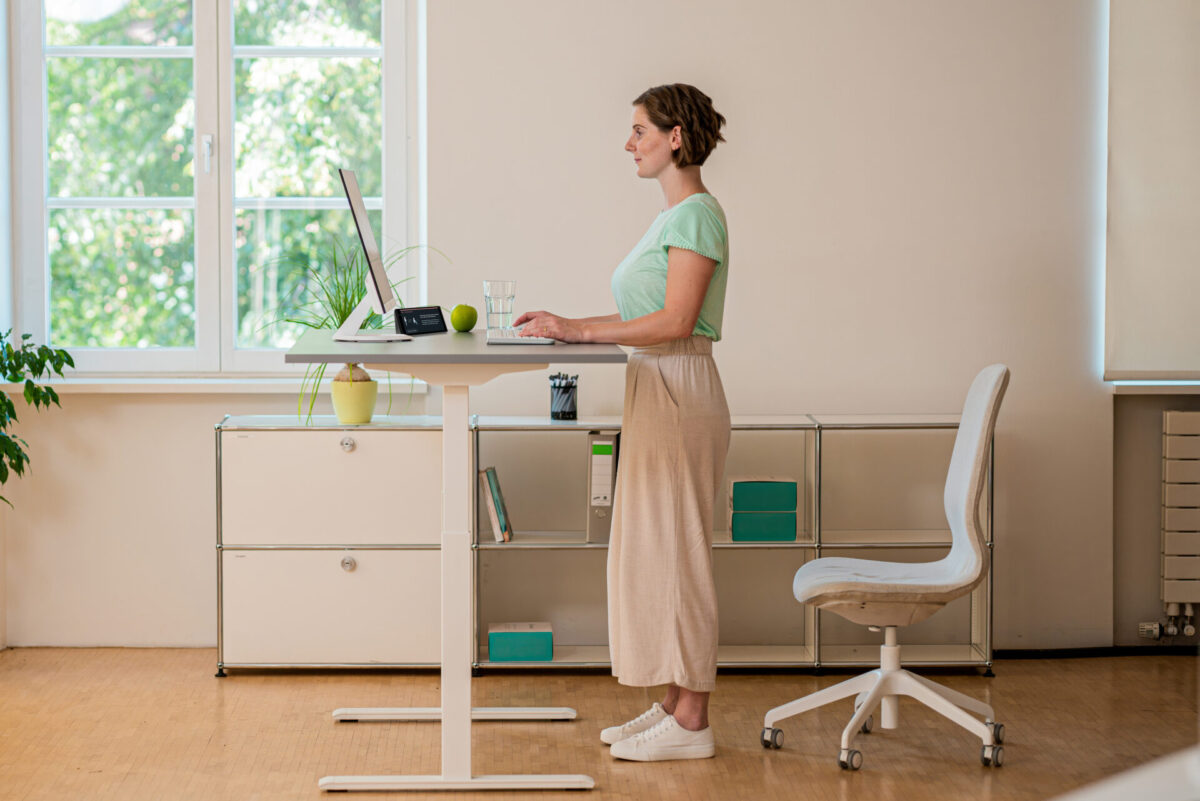
A physiotherapist explained why.
“He told me, ‘You are one of those office worker patients,’” Geravand said during our conversation. “I was like—oh, he has his own category for us.”
Geravand eventually turned that frustration into a product called Isa—a small desk device designed to monitor posture, movement, and environmental factors like noise or air quality. Instead of acting like a fitness tracker for workouts, Isa focuses on the hours most people spend sitting.
“There is an enzyme in your body called lipoprotein lipase,” Geravand explained. “Its job is to remove fat from your blood and bring it into the muscles so it can be burned. If you sit without moving, the activity of that enzyme can drop by up to 90 percent.”
“Imagine sitting for an hour and your body is working at ten percent of what it should be,” he said. “If you repeat that for eight or nine hours every day, it’s no surprise we’re seeing disease go up.”
Consider this episode as a nudge to sit up straight. Drink water. Move a little.
Find out more about Dr. Milad Geravand, here.
Learn more about Deep Care here.
Reach out to today’s host, Erick Espinosa – [email protected]
Get the latest on tech news – https://sociable.co/
Leave an iTunes review – https://rb.gy/ampk26Follow us on your favourite podcast platform – https://link.chtbl.com/rN3x4ecY
Transcript:
Dr. Milad Geravand:
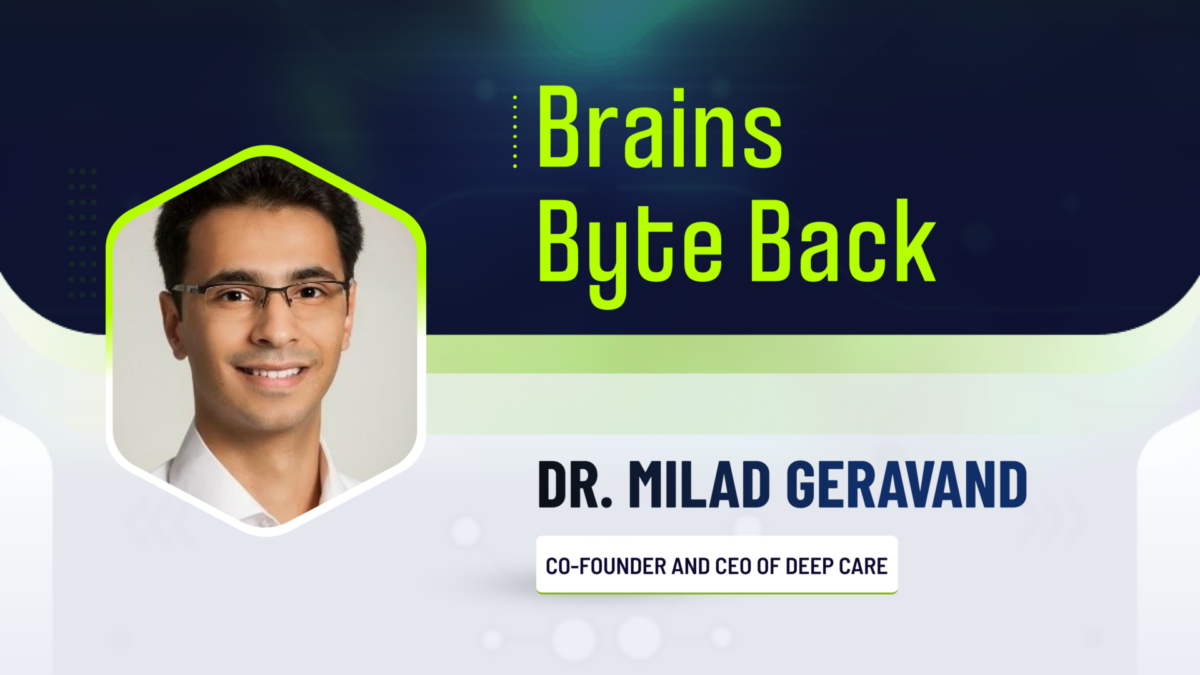
Hi, I’m Milad Geravand. I’m based in Germany and I run a company called Deep Care.
We help office workers with a new type of fitness and health tracker called Isa. With Isa, we help people stay physically and mentally healthier throughout the workday by analyzing what is happening in their daily routine and nudging them at the right moment when their body actually needs it.
In simple terms, we analyze daily behavior and provide timely guidance to help people build healthier habits during the workday.
Erick Espinosa:
Milad, I want to start by thanking you for taking the time to join me on this episode of Brains Byte Back. It’s great to have you here.
This conversation is especially timely — not just because it’s the start of the year and many people are trying to build healthier habits — but because of some recent information released by Statistics Canada.
According to the data, adults in Canada spend more than nine hours a day sitting on average, and fewer than half — about 46% — meet recommended physical activity guidelines. Even more striking, only around 42% stay within the recommended limits for daily sitting time.
What this tells us is that there may be a larger issue here. Many people try to develop healthy habits outside of work — going to the gym or eating healthier — but they often forget that sitting for nine hours a day in front of a screen, not moving much, and maybe not drinking enough water can also have serious effects on health.
Would you agree with that?
Dr. Milad Geravand:
This is really massive.
We are living in a very interesting time. If you compare our lives to 10 or 20 years ago, we have better everything — better chairs, better cars, better food, better technology.
But if you look at the number of patients and chronic health conditions, those numbers are steadily increasing.
At the moment, about 60% of adults in the United States have at least one chronic condition, and healthcare costs related to these conditions reach roughly $4.5 to $4.8 trillion per year.
So we have a contradiction. On one hand, everything in our lives is improving. On the other hand, the number of illnesses continues to rise.
The root cause is not a lack of knowledge anymore. People know that health is important and that exercise matters.
The real issue comes down to daily habits.
For example, if you sit for 60 to 90 minutes without moving, your metabolism can drop significantly.
There is an enzyme in your body called lipoprotein lipase that helps remove fat from your bloodstream and move it into muscles where it can be burned for energy.
If you sit without moving, the activity of this enzyme can drop by up to 90%.
That means fat stays circulating in your blood instead of being burned by muscles.
Imagine sitting for an hour and your metabolism is operating at just 10% of its normal efficiency. Now imagine repeating that pattern for eight or nine hours every day.
Over time, this contributes to conditions like diabetes and other chronic health problems. It doesn’t happen immediately, but after years of this pattern it’s not surprising that we see illness increasing.
Erick Espinosa:
That’s really interesting.
And honestly, I can relate to that personally. Sometimes when I’m going to the gym consistently, I’m very disciplined — eating healthy and staying active. But life happens, work gets busy, and those routines can break.
One thing I notice when I’m exercising regularly is that I’m much hungrier and my metabolism clearly increases. You also notice improvements in things like mental health and energy levels.
Another habit I’ve developed is drinking a lot of water. My friends always tease me because you’ll never see me without a large bottle of water.
I keep it by my bed, at my desk, everywhere. It’s a habit that developed over time, and I believe it makes a difference.
But I’m curious — when did you first start realizing this was a problem you wanted to solve?
Dr. Milad Geravand:
Honestly, it started with me.
I was around 30 years old and working for a well-known company in Germany called Bosch.
Even though I exercised regularly — going to the gym three times a week — I started experiencing back pain.
That surprised me because I thought exercising should prevent that.
I went to a physiotherapist, and he told me something interesting. He said I was one of many office worker patients.
He explained that sitting all day creates specific problems for people who work at desks.
He also said something very important: going to the gym after work does not cancel the negative effects of sitting for nine hours during the day.
That was the moment that really made me think.
At first, I remembered to move more, drink water, and adjust my posture. But after a couple of weeks I fell back into my usual routine.
That’s when I realized the real challenge wasn’t knowledge. I already knew the problem.
What I needed was something like a physiotherapist sitting next to me, analyzing my posture, stress levels, and behavior, and reminding me at the right moment to adjust.
Maybe to drink water, take a break, correct my posture, or move for a moment.
That idea eventually became Isa.
Isa acts like a personal AI assistant that analyzes your behavior and gives small nudges throughout the day — maybe 10 to 15 reminders for simple habits that are easy to integrate into daily life.
Small improvements can lead to massive long-term effects.
If you think about the idea from the book Atomic Habits, small daily changes compound over time.
Erick Espinosa:
I agree.
And today many people already track their health with things like an Apple Watch or other smart devices.
What makes Isa different from those tools?
Dr. Milad Geravand:
That’s a very good question.
Most wearable devices are designed primarily for activities outside of work, like workouts or exercise.
But the eight to nine hours people spend sitting at a desk usually aren’t monitored in detail.
Wearables mainly track signals like heart rate.
What we focus on is the workplace environment.
Isa analyzes things like:
- posture and spine alignment
- musculoskeletal health
- cognitive workload
- stress levels
- air quality, noise, humidity, and temperature
We measure posture with millimeter-level accuracy and analyze cognitive strain, such as when someone has been in meetings for hours without breaks.
This combination of physical health, mental strain, and environmental factors is unique.
Isa doesn’t replace wearables — it complements them.
If someone already uses an Apple Watch or Oura Ring, adding Isa for the workday creates a more complete picture of health.
Erick Espinosa:
What stood out to me about the device is that you’re using AI in a way that doesn’t feel invasive.
From what I understand, Isa is a small device that sits on your desk.
Dr. Milad Geravand:
Exactly.
We designed Isa to be something between you and yourself.
We intentionally avoided using cameras because people don’t want to feel like they are being watched.
Instead, Isa uses depth sensors and distance measurements, so it detects posture but cannot identify a person.
It doesn’t know if Erick or Milad is sitting in front of it. It doesn’t recognize clothing or faces.
It also is not connected directly to the internet, which helps ensure privacy.
The device measures environmental conditions like air quality, temperature, and noise levels.
You simply place it on your desk, plug it in, and when you sit down it automatically begins coaching you.
Over time it learns your patterns and adapts its guidance.
You can think of it as a small physical AI assistant next to you, becoming smarter about your habits each day.
Erick Espinosa:
Early results from Deep Care show outcomes like 56% less sick leave and 58% higher perceived productivity in as little as a few weeks.
Can you talk about that study?
Dr. Milad Geravand:
Yes.
We worked with the Technical University of Munich, one of the leading universities in Europe.
They studied more than 2,300 office workers across multiple locations in Germany who used our product.
Participants used Isa for at least six weeks, although most used it for around three months.
The results were very encouraging.
Participants reported over 50% fewer sick days and significantly higher productivity.
They also showed improvements in posture, movement, and hydration habits.
For companies, that’s important because fewer sick days and healthier employees lead to lower costs and better performance.
Most of our business works directly with organizations that provide Isa to their employees as part of workplace wellbeing programs.
Erick Espinosa:
Was the study focused on office workers, or did it include people working from home as well?
Dr. Milad Geravand:
It included all three groups — people working from home, people working in offices, and hybrid workers.
About 40% worked from home, around 30–35% worked in offices, and the rest had hybrid arrangements.
Interestingly, people working from home often need these reminders even more.
Sometimes the longest walk during the day is just going to the refrigerator.
You can easily sit for eight to ten hours without realizing how quickly time passes.
Erick Espinosa:
When companies install Isa in offices, does any personal data get shared with employers?
Dr. Milad Geravand:
No.
The product is designed so the data remains between the user and the device.
However, employees can optionally share very high-level insights with their employer using a QR code system.
For example, they might share anonymous information about general movement levels or ergonomic habits across the company.
But that’s entirely optional.
Many companies don’t even request it. They simply want to support their employees’ health.
Erick Espinosa:
That makes sense — more of an opt-in approach.
Milad, before we wrap up, if someone wants to learn more about Deep Care or Isa, what’s the best way to reach you?
Dr. Milad Geravand:
The best way is through our website.
We have information for both individuals and companies.
Private users can subscribe directly, and companies can contact us to explore workplace solutions.
The website is deep-care.com.
Erick Espinosa:
Perfect. Milad, thank you again for joining us.
Dr. Milad Geravand:
Thank you, Erick. It was a pleasure.
Disclosure: This article mentions a client of an Espacio portfolio company.