



One Way Ventures has announced the dates and lineup for the second edition of the One Way Summit, the conference dedicated to immigrant founders that first took place in December 2025. The event will return to San Francisco on October 28 through 29 – and this time, organizers are going considerably bigger.
The firm was founded in 2017 on a contrarian conviction: immigrant success is not priced into the market. As per Stanford University’s latest research, immigrants have founded or co-founded 44% of American unicorns – a number One Way Ventures sees not as a feel-good statistic, but as a market inefficiency worth betting on.
“It’s the resilience, the chip on the shoulder, the not giving up,” Eugene Malobrodsky, managing partner at One Way Ventures, said of immigrant founders while in conversation with The Sociable.
When the inaugural summit launched last year, the team wasn’t entirely sure what to expect. Malobrodsky set a floor for himself, however: “I would’ve considered myself as failing if it was less than 350 people.”
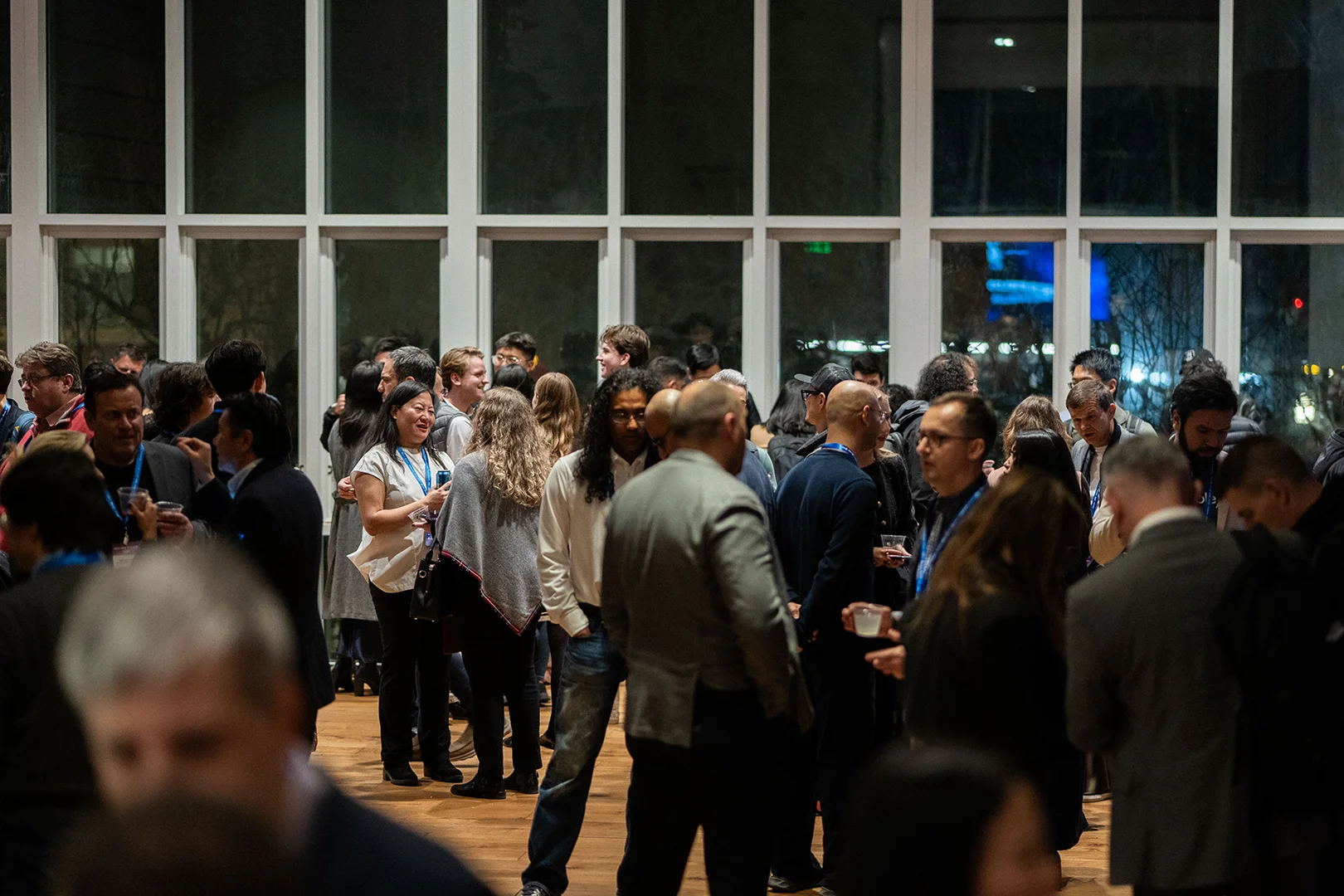
The number turned out to be conservative, in fact: nearly 500 founders and investors showed up, the event sold out early, and the organic reaction was telling. “Without us asking them to post anything, people went home and reflected on that day on LinkedIn,” Malobrodsky recalled. “You realize the impact you actually make on people’s thinking.”
Building on the momentum
For 2026, One Way Ventures is going from one day to two, and from 500 attendees to a target of over 1,000. More than 20 country partners are expected to join, and a first batch of speakers has now been confirmed.
Headlining the event is Vinod Khosla, founder of Menlo Park-based capital firm Khosla Ventures. Khosla himself grew up in India with a fairly specific ambition: building a tech company. Eventually, he made his way to the U.S. to study, where he co-founded Sun Microsystems – later sold to Oracle – and Daisy Systems, which went public, before launching Khosla Ventures in 2004.
The firm has since backed some of the most consequential companies in tech, including OpenAI, Stripe, DoorDash, and Instacart. It is known for investing in early-stage high-risk and high-impact startups especially in areas like AI, climate tech, healthcare and deep tech.
The confirmed speaker lineup also draws from some of the most recognizable names in the industry, including Anna Makanju, vice president of global impact at Open AI, Severin Hacker, co-founder and CTO of Duolingo, and Immad Akhund, founder and CEO of Mercury.
New this year is a global startup pitch competition open to immigrant founders from around the world, with 40-plus startups expected to compete on the second stage. Rather than taking submissions directly, competing startups will come through partner ecosystems – from Startup Island Taiwan to the Start2 Group, Open Austria and the Latino Business Action Network.
“Both the startup and the ecosystem that nominated them are winners,” Malobrodsky explained. One Way Ventures itself may also write checks to companies that catch their attention. “If any of those companies are interesting for us to actually write a larger check, we’d do it,” he said.
Immigrants’ power: community roots
Regardless, the Summit’s core remains building a community of immigrant founders in the U.S. and spotlighting visionaries. The pitch competition, for one, reflects its broader vision for the Summit’s long-term future.
“Think of it as South by Southwest for immigrant entrepreneurship.” And, beyond the networking experience, the chance to actually pitch in front of investors will prove invaluable to participants. “It’s all about the impact on a personal and business level for those founders.”
There’s no shortage of tech conferences in San Francisco, but a dedicated gathering for immigrant founders is a different thing entirely. These innovators often navigate visa uncertainty, building without established networks, and fundraising in a market that still skews heavily toward pattern-matched founders.
Malobrodsky was direct about what immigrant founders need to do differently: “A lot of immigrant founders are not good at packing their pitch into a 90-second elevator pitch. You need to gain interest in the first 30 seconds and keep it engaged – almost like shooting dopamine, the kind of information the other party will be interested in,” he said.
The key, he added, is pitching forward: the big vision, not just what you’ve already built.
The second challenge is stepping outside familiar circles. “When immigrants come to the U.S., they tend to fall into their own ecosystems – Indians with the Indians, Latinos with Latinos. You can do that on a friendly level, but you should be coming out of your comfort zone and going towards blending in with the bigger ecosystem.”
The third is building a public presence: panels, press, visibility. “Perception in the U.S. is very important. You’re almost required to be more of a public figure,” he noted.
The power of storytelling
The timing of the Summit is a “funny coincidence,” according to Malobrodsky; the 2026 edition falls the week before the U.S. midterm elections.
Current political climate, he acknowledges, was actually part of the impetus for launching the Summit last year. “When the Trump administration got elected and this whole rhetoric against immigrants started happening, I thought it was the best time to inspire people, tell them that this is still a place to build companies.”
Malobrodsky recalls a founder who flew in from abroad last year, nervous about what he’d read in the news – and left feeling genuinely welcomed. “He said, ‘I’m at your event and I actually feel great. I can see other people doing amazing things and willing to share and help one another.’”
The mythology of immigrant founders in the U.S. is well-established – Elon Musk, Jensen Huang, Sergey Brin. But Malobrodsky points out that even these figures rarely discuss their immigration stories publicly. “Getting founders to relate on a personal level to the story of the successful founder… that’s where it becomes more interesting. When it’s like, ‘His experience was similar to mine.’”
And, according to the One Way Ventures managing partner , it’s also a matter of showcasing how the personal led to professional success.
“Everybody is focused on: how did you become a billion-dollar company? The personal immigration story doesn’t come up because the people who don’t care about the journey only care about the destination.”
Beyond the Summit, One Way Ventures runs what it calls the Pathfinder Collective – a program that connects immigrant founders of billion-dollar companies with the firm’s portfolio founders. The concept is to tap into successful founders who’ve already built companies and match them with early-stage teams navigating the same hardships.
“If we don’t have the expertise in something, why should we take a board seat?” Malobrodsky questioned. “Maybe there’s more value from one of these other people being on the board because they’re bigger experts.”
The matchmaking is chemistry-first. “We try to see: will those people click?” the executive said. But when they do, the effect compounds: a warm introduction becomes a term sheet, a shared frustration over visa paperwork becomes a co-founder relationship and a conversation at a conference becomes the turning point in somebody’s company.
That, more than any single speaker of pitch competition, is what One Way is truly building toward: a place where immigrant founders stop feeling like outsiders within the ecosystem they’re actively shaping.
Statistics already tell success stories: nearly half of America’s most valuable startups were built by people born elsewhere, and 80% have an immigrant in a C-Suite role. But the Summit is trying to share the story that happens before the billion-dollar milestone; in the hallways and the side conversations and the moment a founder from abroad looks around and thinks “I belong here.”
“What excites me the most is being able to successfully grow the conference and create a larger impact not just for us, but also for these founders,” Malobrodsky explained. While attention is often placed on the destination, then, One Way is betting on the journey.
Tickets for the One Way Summit aren’t on sale yet, and the waitlist for early-bird access is available at onewaysummit.com.
Featured image: Courtesy of One Way Summit
Disclosure: This article mentions clients of an Espacio portfolio company.