

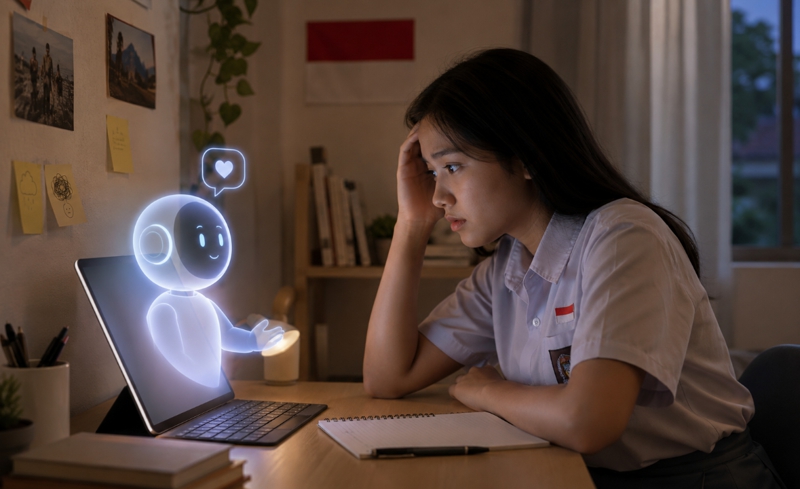


Teachers are concerned about the growing number of students who admit to confiding in AI chatbots like ChatGPT. Research shows that this could lead to social isolation and emotional dependency on technology, especially at a young age. Here’s how educators in Indonesia are approaching the phenomenon.
English teacher Tiara Regina, 25, was surprised to discover that nearly all the high school students she talked to at a seminar on anxiety in adolescents admitted to confiding in ChatGPT about their personal struggles.
“I want to say 98% of them said that they confided in ChatGPT. Which I thought was incredibly disappointing,” the Indonesia-based teacher told The Sociable.
When asked why they preferred talking to ChatGPT over other people around them, Regina explained that many of them felt a lot safer speaking to a “man-made machine than actual real-life people who can actually give them feedback and criticism.”
“I always tell them that there are other ways to cope with what you’re feeling. Whatever big feelings you may be having right now, you can either talk about it to someone, or if you don’t feel safe enough to do it, you can write about it [in a] journal“
Tiara Regina
As an educator who has been teaching for more than eight years in both China and Indonesia, Regina felt disheartened that students put more trust in an AI chatbot than their parents or guidance counsellors.
“The first emotion that hit me was just a big wave of sadness and disappointment. Not at the kids, but more towards us adults who seemingly are unable to create a safe space for them to let out their emotions,” she said.
According to research done by Febfi Norsely, Heidy Arviani, and Achmad Zainal Abidin published in the Journal for Development in Communications and Social Sciences, teenagers feel more comfortable talking to ChatGPT about their problems because it absolves them of worrying about judgment or potential social consequences when sharing personal issues.
Respondents admit to a fear of being judged when confiding in real people around them. On the other hand, chatting with ChatGPT about their problems gives them a sense of security since they believe the information is safe within the AI’s database.
The research also noted that over time, adolescents tend to develop a dependence on ChatGPT when they start to unload their personal problems. Recent data from OpenAI shows that around 0.15%, or over a million people, interact with their AI about serious mental health crises every week.
“I always tell them that there are other ways to cope with what you’re feeling. Whatever big feelings you may be having right now, you can either talk about it to someone, or if you don’t feel safe enough to do it, you can write about it [in a] journal,” said Regina.
She believes that educators play a big role in creating a safe space for students to grow and develop, but it is also up to guidance counsellors and parents to ensure their well-being.
“Personally, I’m afraid the children will be more comfortable interacting with machines than with humans. This is also our responsibility in education, for teachers and guidance counselors”
Sigit Setyawan
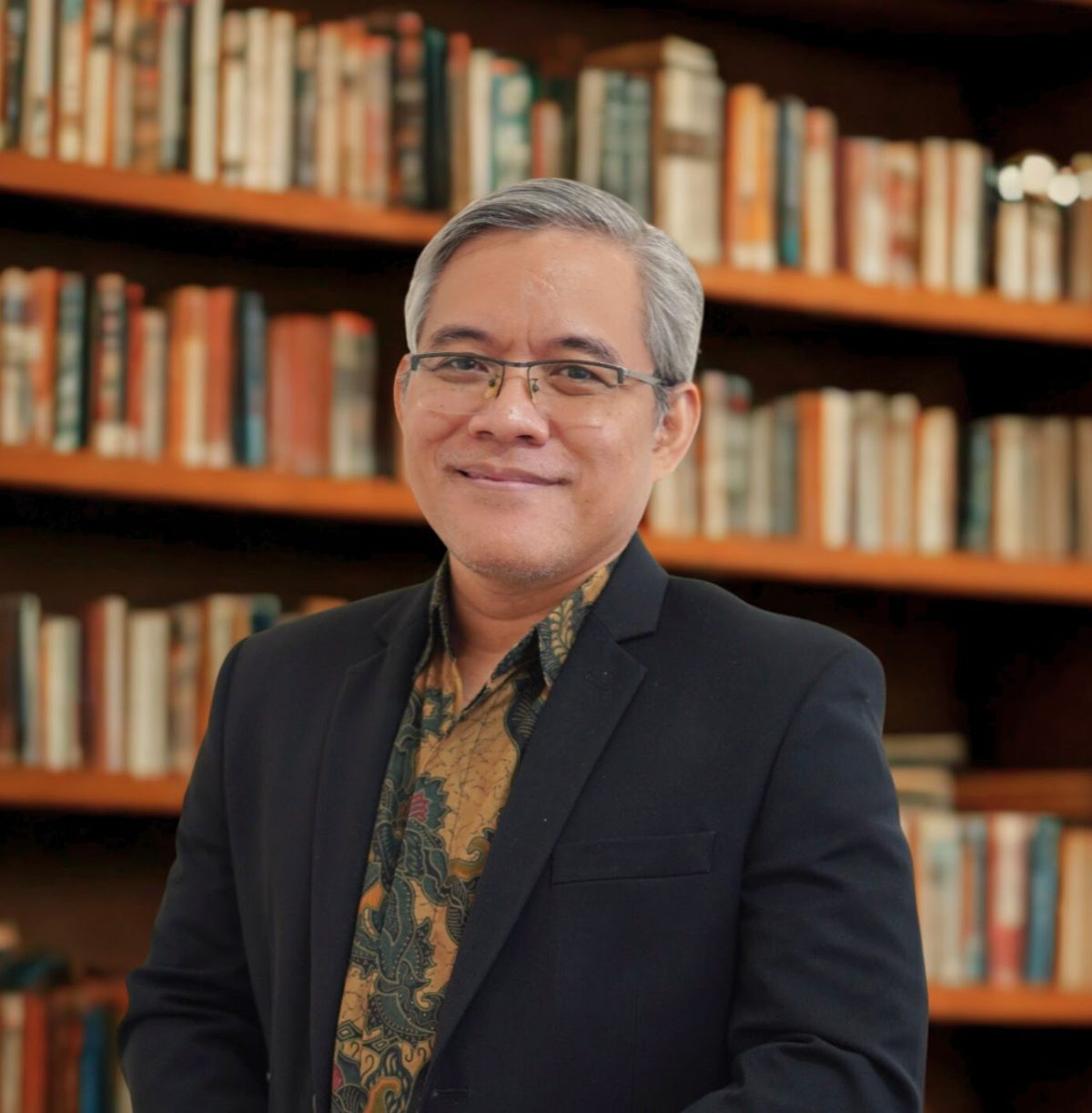
Sigit Setyawan, executive Director of the Pelita Nusantara Kasih Christian School in Solo, Indonesia and author of “Teaching 5.0,” a book on how teachers can adapt to the rise of technology such as AI in classrooms, expressed concern over the number of students at his school who have also begun to talk to ChatGPT about their problems.
“Personally, I’m afraid the children will be more comfortable interacting with machines than with humans. This is also our responsibility in education, for teachers and guidance counselors,” said Setyawan.
“Perhaps there are some things that need to be examined further, whether more guidance is needed at home or at school. But I think all schools, not just ours, need to start thinking seriously about this,” he added.
Setyawan believes that schools have a responsibility to teach children about honesty, integrity, and critical thinking. In the age of AI, these values become crucial as more students are exposed to the technology that could very well lead them to using “short-cuts” to bypass school tasks.
He brought up calculators as an example of how technology has influenced educational development. In 1966, teachers took to the streets to protest the introduction of calculators into classrooms, believing that it would take away students’ abilities to do basic mathematics.
However, the assumption proved to be untrue. Therefore, Setyawan explained that AI can also help students learn better by providing access to knowledge without taking away their ability to think critically about the technology in their hands.
“So, I think what the education sector needs to do is educate children about systemic thinking, emotional intelligence, and cognitive strategies. Therefore, the curriculum design must truly address how to think. It’s not about how to work, but how to think,” he said.
Schools in Indonesia have yet to start formally implementing AI in classrooms. Despite this fact, students are already starting to use it for personal and academic use.
In May 2025, the Minister of Primary and Secondary Education Abdul Mu’ti announced that coding and artificial intelligence (AI) will soon be introduced into the school curriculum beginning in the 2025/2026 semester. At the time this article was published, the regulations were reportedly still being drafted.
Main image source: AI generated with ChatGPT