


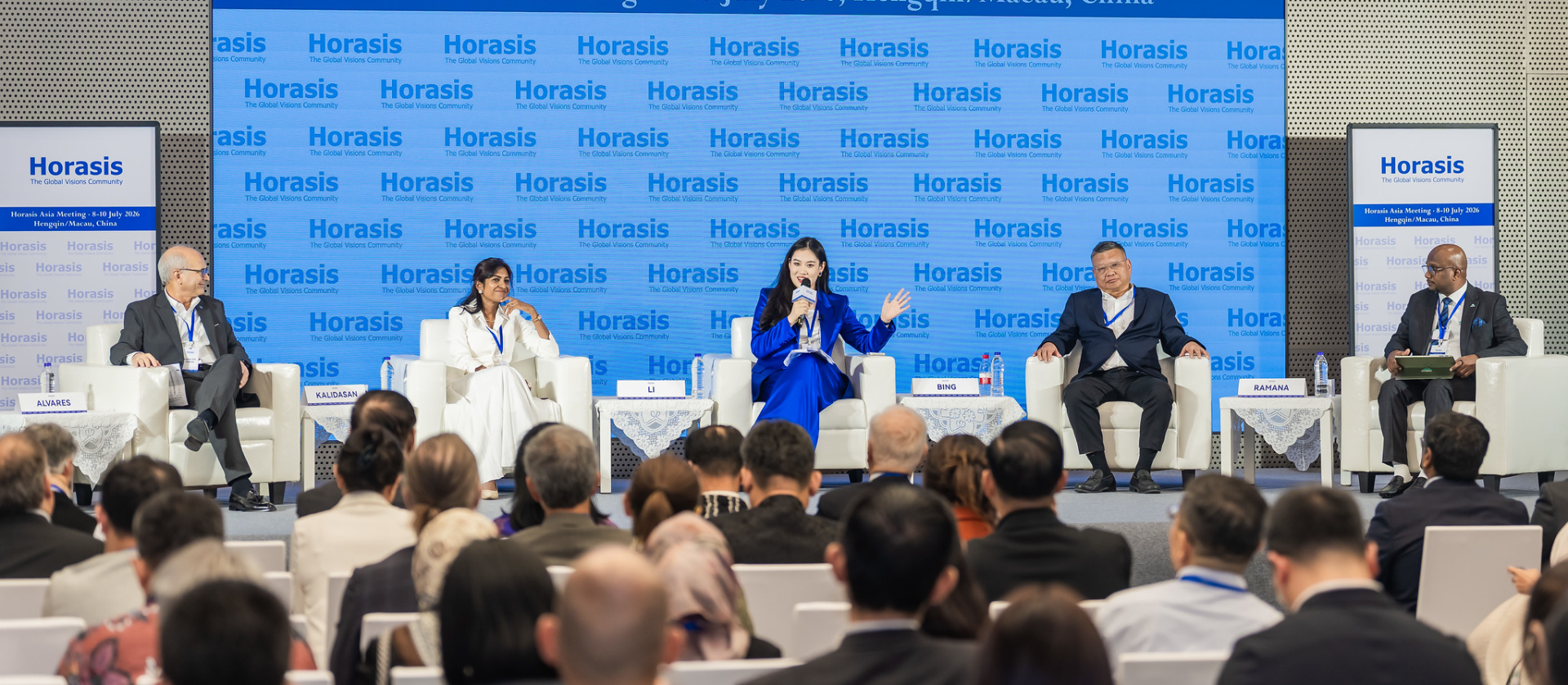


Horasis Global Summit 2026 is bringing together founders, investors and technology leaders to examine how more women can shape the systems driving the next wave of innovation.
As domain leaders come together to “Build Tomorrow” at the Horasis Global Summit 2026 in Medellín, Colombia, one topic of conversation is all set to drive the agenda forward. Artificial intelligence and emerging technologies are changing how economies work, how people interact with digital services, and how companies compete. Those who will be designing and directing these systems is vital, but it is imperative that women are a part of the cohort.
Thus, one of the key questions at the heart of the summit is: How do we ensure that the list of tech leaders of tomorrow include more women than they do now.
A session titled “Women: The Tech Leaders of Tomorrow,” is set to bring together women working across entrepreneurship, investment, product leadership and business networks to discuss what comes next and how to optimize resources that already exist. The focus of this panel extends beyond representation: it aims to ask how companies, investors and educators can help more women move into technical leadership and deep-tech funding, and ensure they shape the AI era as builders, and not simply as participants.
The agenda of this particular session is a close fit with the summit’s overarching theme of “Building Tomorrow.” Over four days, November 10 to November 13, the summit aims to explore how societies can guide technological change while widening opportunities and strengthening resilience. The panel on women leaders and technology puts a specific question to the forefront: As newer technology gets built, who will help make the choices that determine what comes next and how it is built and used?
A panel spanning technology and investment
The speakers listed to be a part of the “Women: The Tech Leaders of Tomorrow” panel bring different routes into the technology conversation. Luzcenit Acosta-Guio, founder of Arakue in Colombia, will join Sarah Dong, managing partner at CEO Clubs Network in China. The programme also lists Jamilah Mena, founder and chief executive of Nemeri Ventures in the United States; Ivette Chalela Naffah, an independent board member, investor and co-founder from Mexico; and Veronica Rodriguez, a product and AI leader and community advocate in Colombia.
The range of these varied voices matter. Deep-tech growth depends on technical ideas, but it also depends on capital, commercial partnerships and decisions about which products reach the market. This panel brings together company founders, an investor and product leadership, all of whom can approach the pipeline from several sides: developing technology, funding it, bringing it to users and building the networks that help companies grow.
Mena’s work at Nemeri Ventures offers a concrete link between the session’s discussion of women in technology and the question of access to capital. Nemeri Ventures works to support women of color founders with early-stage strategy and get investor-ready, including helping them prepare for funding opportunities. This connects directly with the panel’s main discussion point about how investors and companies can give women more access to deep-tech funding.
Dong’s role at CEO Clubs Network adds a business-network perspective to the panel discussion. Her organization describes itself as a platform that connects executives and entrepreneurs across regions and its recent coverage of CEO Clubs’ China activities highlights cross-border business links and opportunities for its members. As businesses seek partners and markets across borders, networks like Dong’s can influence which founders and companies gain visibility and access.
Building the pipeline, not just the headline
The “Women: The Tech Leaders of Tomorrow” highlights the need to accelerate women’s movement into technical leadership and deep-tech investment. Significantly, this is a pipeline question and not just an inclusion issue. Even if resources exist, are women actually able to access education, mentorship capital and play a role in decision-making opportunities that will let them progress from simplu handling technical mandates into leadership roles.
This is where panelist Veronica Rodriguez’s inputs are to be invaluable as it brings a community dimension to this challenge. Verónica Rodríguez Viveros is a technology and product professional with experience in digital products across fintech, cybersecurity and global platforms. Her work also focuses on building a community that helps increase the participation of people of African descent in technology in Colombia and Latin America, through training, mentoring and technical community-building.
This combination of product experience and community work bridges the session’s two central ideas: women should help shape technology, and the industry needs stronger routes for more women to enter and lead it.
Investor and independent board member Naffah also adds another vantage point to this discussion: how leadership and investment decisions influence which technologies receive support. Her advisory-board is directly involved with Women in Emtech, a group focused on women in emerging technology.
A chair with a cross-border perspective
Juliana Cabrejo Porras, co-founder and managing director of Latinoamerica Business Center, will be chairing this very important session. Porras’ work centers on building connections between Latin America and the Middle East. Her center at Universidad de La Sabana helps Latin American companies reach markets in the United Arab Emirates, drawing on her personl experience in international business and corporate roles at companies like IBM, Microsoft, Samsung and Honeywell.
Porras’ cross-border perspective is important in this discussion about technology leadership as access to markets, partnerships and investment shape whether an idea scales or tanks.
A contribution to the summit’s wider agenda
This panel’s potential impact lies in putting practical questions on the summit’s agenda. How do we build a deeper pipeline of women technical leaders, make funding more accessible and ensure women influence the development of all emerging technologies.
As the summit considers how to build a future shaped by rapid technological change, “Women: The Tech Leaders of Tomorrow” puts the spotlight on a basic condition for that future. The people designing and directing new systems need to include a broader range of experience and this panel’s contribution will be to make that principle concrete.